
A friend sent me a WhatsApp message the other day. She had been suffering from a sore throat and a high temperature, and one observation in particular caught my attention.
“My voice was so croaky that Alexa couldn’t understand me!!”
My friend is not disabled, but I knew exactly what she meant. A few days earlier, I had experienced something similar. I had phlegm at the back of my throat that I couldn’t clear, and both Alexa and Meta AI on my smart glasses were struggling to understand me.
It didn’t last long, but it prompted a rather uncomfortable thought. If I can’t communicate with Alexa, Meta AI, Siri or any of the emerging AI voice assistants, I’m in trouble. Or, as I put it rather less politely to my friend, I’m completely fucked.
At the time, I had been trying to call my carer, who wasn’t there. Fortunately, it wasn’t an emergency. What if it had been?
When convenience becomes dependence
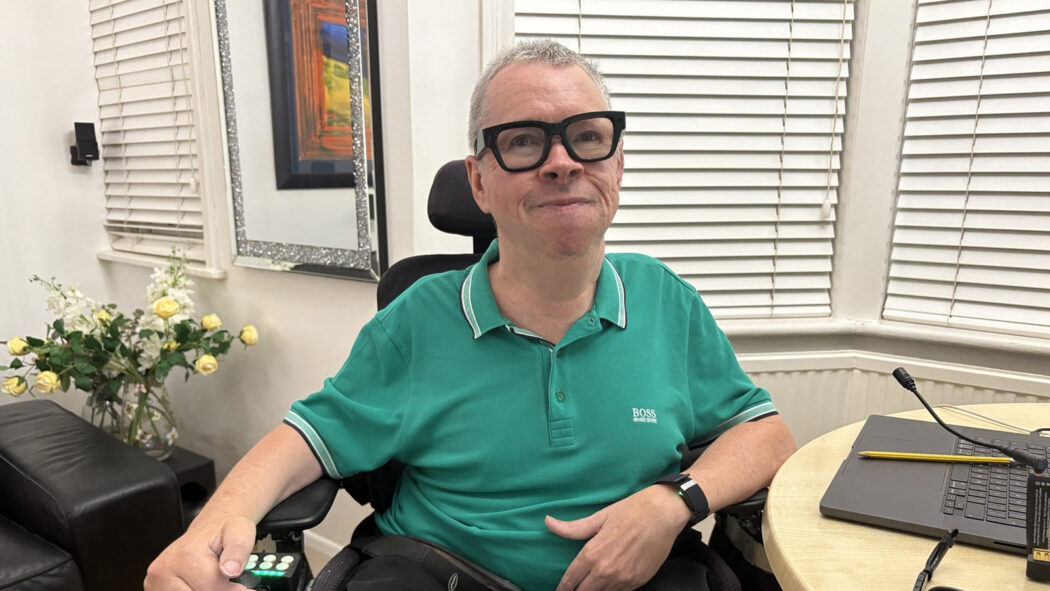
As someone with muscular dystrophy who uses a powered wheelchair and has very limited movement in my arms and hands, voice technology has transformed my everyday life. I can make phone calls, send messages, adjust the heating, open my blinds and unlock my front door, all without physical assistance.
For my friend, being unable to communicate with Alexa was an inconvenience. She could pick up her phone or operate a physical switch. I don’t have those options.
We hear a great deal about the independence voice technology affords disabled people, but considerably less about what happens when we temporarily lose the ability to use it.
Having several voice assistants at my disposal offers little reassurance when the problem is my voice rather than the technology. In effect, speech becomes a single point of failure.
Beyond the human voice
My friend asked whether I could have some kind of backup. Surely, she suggested, there must be emergency systems that cater for everyone.
The problem with many conventional personal alarms, whether worn around the neck or on the wrist, is that they still assume a degree of physical dexterity. An emergency button is of little use if you cannot reach or press it.
Specialist assistive technologies already offer alternative methods of interaction, including eye tracking, but I would like to see more of this technology built into affordable, mainstream consumer devices.
Improving speech recognition for people with impaired or atypical speech is important, and initiatives such as the Speech Accessibility Project at the University of Illinois are welcome. Yet even the most sophisticated artificial intelligence cannot recognise words that someone is physically unable to utter.
We need practical alternatives for communicating with our devices.
An opportunity for smart glasses makers
I wear Ray-Ban Meta smart glasses every day and have experienced firsthand how useful they can be for someone with a physical disability.
With Meta introducing in-lens displays and Google developing display-equipped smart glasses with its partners, there is an opportunity to add eye tracking as an alternative means of hands-free interaction.
Imagine being able to navigate a menu in the display of your glasses using your eyes, select a contact by holding your gaze on their name, or send a predefined message asking for help. Could I even summon assistance by deliberately blinking three times?
Meta has developed its Neural Band wristband, which translates electrical signals from muscles in the forearm into commands for its display-equipped glasses. When Meta visited me at home in October 2025 to test the technology, I was unable to perform the available gestures because of my muscle weakness. It is an impressive development, but it also illustrates the need for alternative methods of interaction.
Eye tracking is hardly a new concept. Disabled people have used it to operate computers and communicate for years. Apple already offers eye tracking on the iPhone and iPad, and the technology is an integral part of its Vision Pro headset.
There are already encouraging developments in smart glasses. Meta has demonstrated eye tracking in its Orion augmented reality glasses prototype, although its interface combines eye movements with other methods of interaction, including hand gestures and its Neural Band.
Smaller manufacturers are also making progress. Everysight’s forthcoming Maverick AI Pro glasses feature built-in eye tracking designed for hands-free interaction, and its developer documentation even includes an example of blink detection. Chinese manufacturer Rokid’s recently announced Color smart glasses reportedly support eye tracking too.
Whether these products will offer a fully accessible alternative to voice and physical controls remains to be seen. Detecting where someone is looking is one thing; enabling them to operate a device entirely with their eyes is another.
What I would like to see is reliable eye-based control in lightweight, mainstream smart glasses that people can comfortably wear throughout the day.
Its usefulness would extend well beyond emergencies. Being able to navigate messages, dismiss notifications, control smart home devices and interact with an AI assistant without speaking or moving my hands would be a significant development.
There would be genuine technical challenges, not least miniaturisation, battery life and distinguishing deliberate eye movements from natural ones. Any feature designed to summon assistance would need to be particularly reliable and provide confirmation that a request for help had been sent.
Nevertheless, I would urge Meta and Google, and Apple should it enter the smart glasses market, to consider eye tracking as an integral part of the interface when designing glasses with displays, rather than an accessibility feature to be added at a later date.
Hands-free should not mean voice-only
Technology companies are investing heavily in making conversations with artificial intelligence more natural and human. As they develop increasingly sophisticated voice assistants, they also need to consider how we communicate with them when we cannot speak.
For me, eye tracking would complement voice control rather than replace it.
And as my friend’s experience demonstrates, you don’t have to be disabled to temporarily lose the ability to communicate effectively through speech.
She summed it up rather well in her final WhatsApp message.
“There must be a better way.”