
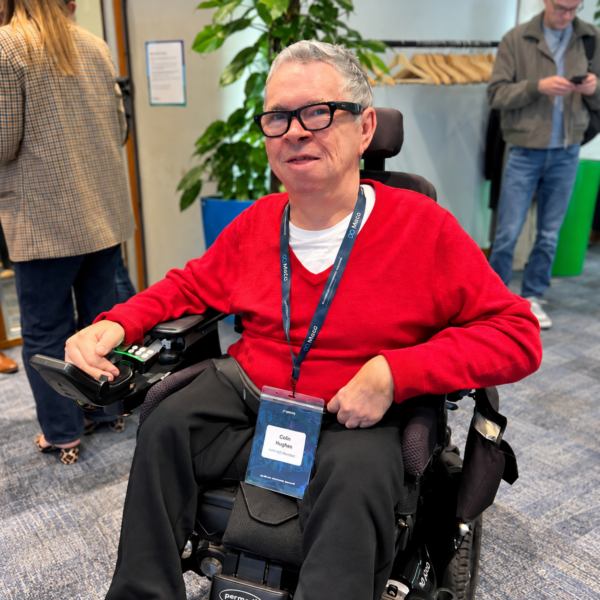
Just two weeks after leaving hospital following pneumonia, I travelled across London by ambulance to Meta’s headquarters in King’s Cross for its AI Glasses Community Summit on Monday 19 October.
Meta had kindly arranged the transport, but significant traffic disruption around Parliament Square made an already tiring journey even longer. I rarely venture that far across London these days, particularly while recovering from illness. This was an event I was determined not to miss.
It was Meta’s first AI Glasses Community Summit outside the United States, bringing together businesses, developers, creators, charities, disability advocates and policymakers. The discussions ranged from commercial applications and developer tools to accessibility and the experiences of people using the glasses in everyday life.
Smart glasses beyond the usual consumer uses
The range of applications was one of the more interesting aspects of the day. Among the examples were a nail professional using smart glasses at work and a business exploring their use for museum tours. Both illustrated how the technology is finding applications beyond taking photos, listening to music or asking an AI assistant a question.
Developers were another important part of the summit. Meta is seeking to establish its glasses as a platform for third-party applications, rather than limiting them to features developed in-house.
Its Wearables Device Access Toolkit allows developers to extend existing iOS and Android apps with supported camera, microphone, audio and other capabilities. Version 1.0 began rolling out at the end of September.
The possibilities for businesses, cultural attractions and accessibility are considerable. Much will depend on what developers produce and how reliably their applications work in everyday situations.
What the glasses are making possible
Accessibility featured prominently, with contributions from people whose disabilities affect them in very different ways.
One highlight was hearing Chris McCausland, the blind comedian and Strictly Come Dancing winner, describe using his glasses to identify records in his extensive vinyl collection. It was an engaging example of technology making an ordinary pleasure more accessible.
Chris also made a point that struck a chord with me. For years, disabled people have often had to rely on specialist technology that was expensive and not particularly attractive. Ray-Ban Meta glasses, by contrast, look good and are relatively affordable compared with many specialist alternatives. They are mainstream products that disabled and non-disabled people alike can enjoy.
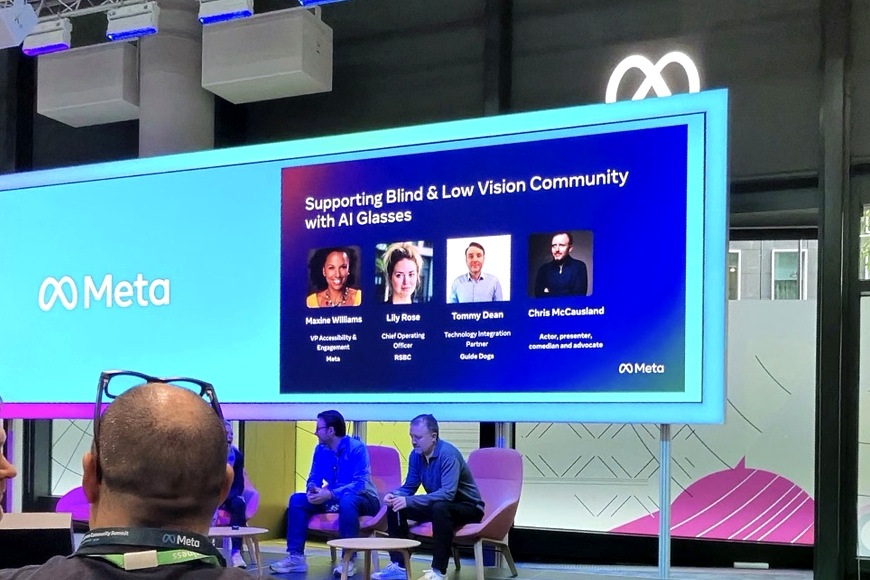
Meta has understandably devoted considerable attention to blind and partially sighted people. In August, it announced the donation of 15,000 pairs of Ray-Ban Meta glasses to Vision Ireland, with training and support for eligible recipients.
But I would welcome more emphasis on the benefits for people with severe physical disabilities who cannot pick up or operate a smartphone.
It was therefore particularly good to hear injured military veterans Mark Ormrod MBE and Simon Harmer discussing how hands-free technology can help with everyday activities. Both have experienced limb loss, and their accounts also touched on the independence and sense of personal safety these glasses can offer.
That last point resonated with me. I have written many times about the reassurance my smart glasses give me when I am out in my powered wheelchair. Knowing I can contact someone using my voice, without needing to handle a phone, makes me feel safer. The technology isn’t infallible or a substitute for dependable support, but that additional means of communication matters enormously.
Muscular dystrophy has left me with extremely limited movement in my arms and hands. My Ray-Ban Meta glasses also allow me to make calls, dictate messages and take photos independently. Some of the photos accompanying this article were taken by me at the summit, something I couldn’t have done without assistance before these glasses came along.
It would be unfair to suggest Meta has overlooked physical disabilities. Earlier this year, the company highlighted Noah Currier, a former US Marine with quadriplegia who described being able to photograph his baby using voice commands.
That is precisely the sort of experience I would like to see Meta promote more widely, alongside its important work with people affected by sight and hearing loss.
Privacy concerns cast a shadow
Inside Meta’s King’s Cross headquarters, there was considerable optimism about what smart glasses could make possible. Outside the summit, the public debate has been considerably less positive.
Privacy and misuse were not discussed at the event, but the controversy had become difficult to ignore. Campaigners had taken their objections beyond social media, with spoof advertisements appearing at London bus stops and unauthorised notices on the Underground criticising the glasses and the potential for covert recording.
These concerns cannot simply be dismissed. People have legitimate reasons to object to being filmed without their knowledge, particularly where recordings are used for harassment or shared online without consent.
On 13 October, the European Data Protection Board warned about the privacy risks posed by smart glasses and called for stronger safeguards.
But restrictions must also recognise legitimate assistive uses. The Royal National Institute of Blind People (RNIB) has warned that blanket bans by venues and service providers risk excluding blind and partially sighted people who depend on the technology.
I agree with RNIB’s call for a proportionate approach. Banning smart glasses altogether would be a serious setback for disabled people who benefit from them.
I have also argued against proposals to restrict their sale to disabled people alone. Part of their strength is that they are mainstream consumer products, attracting investment, competition and innovation. Turning them into specialist disability equipment risks higher prices, less choice and slower development.
We need effective safeguards against misuse, not restrictions that undermine the benefits of the technology.
Accessibility also means reliability
There is another qualification to the positive publicity surrounding smart glasses: the technology does not always work as reliably as it should.
In September, RNIB reported mixed feedback from blind and partially sighted people. Concerns included inaccurate AI responses, cameras that do not always detect obstacles, weak internet connections and features advertised elsewhere that remain unavailable in the UK.
These concerns reflect a broader frustration of mine. Ray-Ban Meta glasses have now been on sale for three years, and I would like to see the technology move beyond the early-adopter stage and become a mature, rock-solid product. Yet the British English voice and language option has disappeared from my glasses for several weeks, weather temperatures are read out in Fahrenheit, and some of the most useful AI features still reach American users long before becoming available elsewhere.
My concerns also extend to the hardware itself. Voice recognition and outgoing audio quality on my Ray-Ban Meta Gen 2 Wayfarers are generally good. But the Ray-Ban Meta Blayzer Optics, a different Gen 2 frame design intended for prescription wearers, have been less reliable for me. Across two pairs, I have experienced poorer microphone sound, inconsistent responses to the wake word and dictation that stops before I have finished speaking.
Meta has responded to my concerns and arranged a replacement, which improved some aspects of the experience, although the remaining problems have not been resolved. I cannot say whether they affect the models more widely. At the summit, I had the opportunity to discuss these issues directly with two Meta engineers involved in developing the glasses, and I hope something practical comes from that conversation.
When voice control is your primary means of using a device, these problems are more than minor irritations. Reliability isn’t a luxury when you cannot simply fall back on using a touchscreen.
Listening is only the beginning
I appreciated the opportunity at the summit to speak with people at Meta and hear directly from others using the technology.
I’ve always tried to maintain a relationship with Meta as a critical friend. I’m happy to recognise improvements, but equally willing to point out when something isn’t working.
My experience is that the company does listen and respond to feedback. That is encouraging, although the real measure of progress is whether those conversations lead to better products.
What I took away from King’s Cross was a clearer understanding of how varied the uses of smart glasses are becoming, from businesses and independent developers to disabled people finding practical ways to do things they previously couldn’t do alone.

It was an exhausting day, but I’m glad I went. The potential is considerable, provided manufacturers continue to take privacy, accessibility and reliability seriously.