
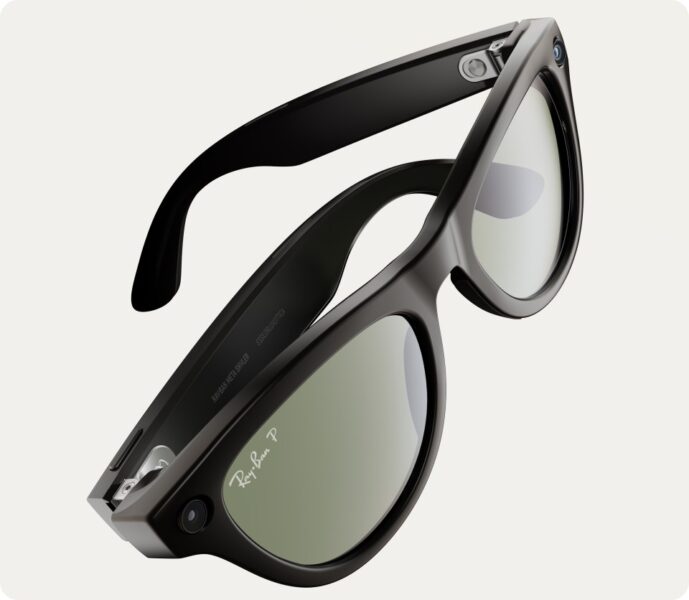
When I go out on my own in London, my Meta smart glasses help me feel safer. I can call someone, dictate a WhatsApp message or send a photograph to family and friends, all by voice. A video call can let someone see what I am looking at if I need help.
I have muscular dystrophy and use a powered wheelchair. I cannot pick up a phone to make a call or turn my wrist to see and use a smartwatch, a limitation I have written about for The Register in relation to Apple Watch. Meta’s glasses let me do things for myself that would otherwise require somebody else’s help.
As Meta Connect begins today, 23 September, new products and features will inevitably command attention. Keeping existing customers satisfied and giving prospective buyers confidence in the reliability of the glasses should be just as important.
I am very much a power user. I put the glasses on in the morning and wear them until the evening. I use calls, messaging, the camera and Meta AI far more than someone who puts the glasses on occasionally might.
Independence worth protecting
Over the past three years, Meta’s glasses have changed what I can do independently. Calls, messages, photographs, timers and reminders have become part of my day. Even asking the time matters when the alternative is having to ask another person.
At my goddaughter’s graduation celebration, I could take photographs myself. I could be the family photographer, rather than always being the person in somebody else’s picture.
That is why reliability is not a minor technical issue for me. When a feature stops working, it can take away something I had previously been able to do independently.
Familiar tasks have become less dependable
From around mid-August, both my Ray-Ban Meta Gen 2 and Blayzer Optics glasses became less dependable, although the problems were not always the same on both pairs.
For about a week, the Blayzer glasses stopped responding reliably to “Hey Meta” and “OK Meta”. My Ray-Ban Meta Gen 2 glasses continued to handle some basic tasks, but Meta AI struggled with questions it would previously have answered. Something as ordinary as asking about tomorrow’s weather could produce the message: “Based on your location, you can now use Meta AI to answer that question. To turn it on, go to the Meta AI app.” Meta AI was already turned on.
UK English also disappeared from the app for a period, leaving only American voices. Temperatures were read out in Fahrenheit rather than the Celsius normally used in the UK.
By 11 September, voice activation was working again on the Blayzer glasses. On 14 September, UK English returned and I could select the British Atlas voice again, although that voice has since disappeared once more. At the time of writing, wake-word recognition remains unreliable on the Blayzer glasses. My Gen 2 pair responds more consistently, but sometimes still needs a second attempt.
There has been another persistent irritation. For the past few weeks, my iPhone has sent notifications several times a day announcing new features for the glasses and prompting me to open the Meta AI app. When I do, there is usually nothing there. Once, I briefly saw a splash screen referring to a new Instagram sharing feature, but it disappeared after a few seconds and I have been unable to find it again. After weeks of these alerts, I still do not know what most of them are announcing.
Re-pairing the glasses and activating Meta AI again appeared to restore its ability to answer questions, but that has not been a lasting fix. The Blayzer glasses are currently answering those questions again. On my Gen 2 pair, switching Meta AI off and back on restored responses when I last used them, although I cannot yet say whether that improvement will last.
Audible integration, meanwhile, has failed for me for months despite repeated attempts to reconnect it.
Some of these problems first appeared while I was running an iOS 27 public beta, which was a fair qualification at the time. My iPhone is now running the public release of iOS 27 and several of the problems remain.
It is important to distinguish the hardware problems from the software ones. Some of the trouble with my Blayzer glasses is hardware-related, and Meta has offered to replace them free of charge. I have also had good support from Meta in troubleshooting the issues, and I appreciate the time its staff have spent helping me. That deserves acknowledgement, even though several problems remain unresolved or have returned after apparently being fixed.
Calls and messages need consistency
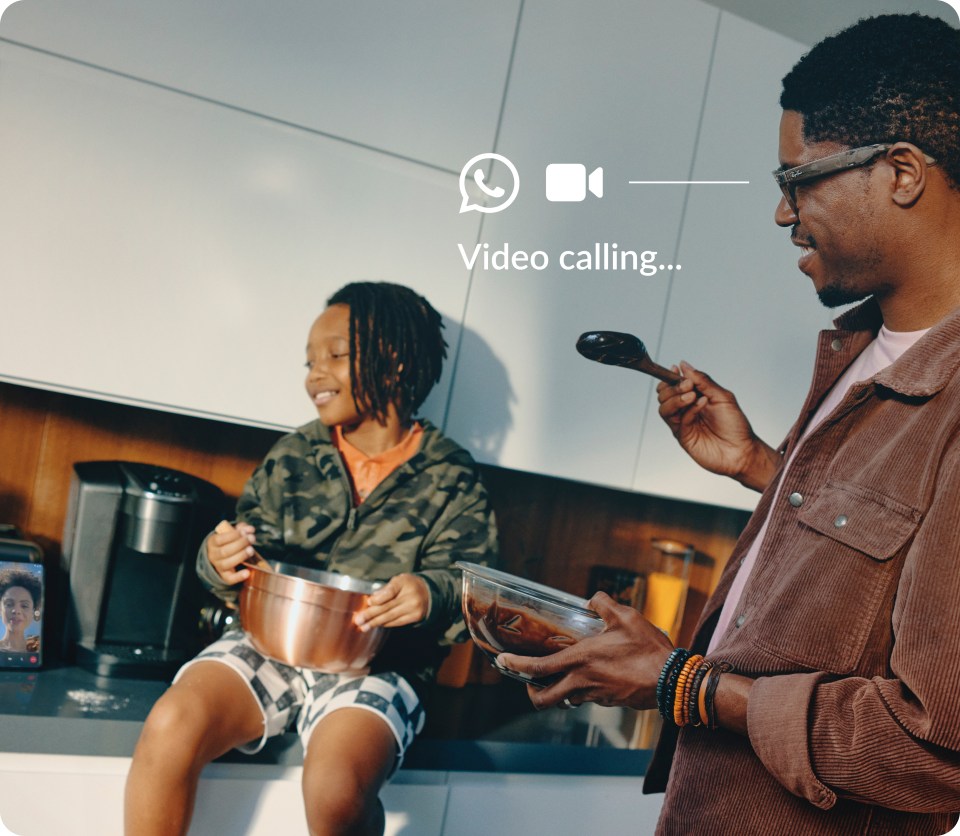
There has also been a frustrating change to calls and messaging. Despite having access to my contacts, recent calls and favourites, the glasses have repeatedly asked whether I want to use my phone or WhatsApp when contacting familiar people.
For the past two days, the Blayzer glasses have recognised my favourites correctly when messaging, but my Gen 2 pair still asks which service to use. Both are connected to the same iPhone. I understand the need to clarify an ambiguous request, but repeatedly making the same choice for a familiar contact adds an unnecessary step.
Meta
The process of sending a message has changed too. After I finish dictating, I now hear “to cancel, say stop”. I have since realised that if I say nothing, the message sends automatically after a short pause. That can be convenient and reduces the number of spoken responses required, something I have wanted Meta to address. But it was not clear to me that this was how it now worked, particularly amid the other faults I have been experiencing. Previously, the glasses would read the message back and ask whether I was “ready to send it”. I found that easier to understand.
A separate option to skip the read-back for short messages would also be welcome. For something as simple as “see you soon”, that could save time. Apple already offers a Reply Without Confirmation option for replies through Siri and AirPods. I would like Meta to offer similar flexibility, while keeping a clear read-back and confirmation process for people who want it.
Other owners report similar problems
Some of these experiences are echoed by other owners. On Meta’s community forum, a recent contributor reported that UK English was missing from the settings, despite being listed as available in the troubleshooting guidance.
In an earlier discussion on Meta’s forum, owners described “Hey Meta” failing to respond and WhatsApp messages no longer being read aloud. The original poster later said that signing out and back in restored voice activation, although they had to reconnect their apps and services.
On Reddit, another owner described a changed AI voice and repeated disconnections after updates. They subsequently reported resolving the problem by reverting to an earlier app version.
These are individual accounts. They cannot establish how widespread the problems are or whether they share a cause. They do, however, describe failures in the everyday functions that make the glasses useful. For those of us who depend on voice access, the consequences can extend well beyond inconvenience.
Privacy and public confidence
Reliability is not the only concern facing Meta. In Australia, the federal government is considering restrictions on smart glasses in its offices and service centres over privacy concerns.
Meta needs to address legitimate questions about recording, consent and where these devices are appropriate. Their value to disabled people does not remove that responsibility.
For people already relying on the glasses every day, confidence also depends on something more ordinary: whether they work when needed. Existing owners need reasons to keep wearing them, and prospective customers need confidence in what they are buying. Unreliable software gives both groups a reason to look elsewhere.
“Just works” is a reasonable ambition
A call through smart glasses depends on more than the hardware sitting on your face. The glasses, phone, apps and connected services all have to work together.
Meta does not control iOS or Android, but keeping pace with them is part of supporting its products. Familiar functions should survive updates, and changes should be explained clearly. Recovering from a fault should not routinely require a complicated sequence of resets and re-pairing.
For disabled people, there is a further consequence. If voice control fails, a physical button does not necessarily provide an alternative. In my case, it does not. A function can still be available on the glasses and yet be completely inaccessible to me.
I have really appreciated Meta’s support and the time its staff have spent helping me work through these issues. I hope that work leads to lasting fixes for everyone and gives me more confidence using the glasses each day.
Give existing features the support they need
As Meta sets out its plans at Connect, I would like it to give just as much attention to what people already do with its glasses every day.
That means repeatedly testing familiar tasks: calling a favourite contact, sending a WhatsApp message, asking the time, setting a timer, taking a photograph and asking Meta AI a question. Those checks need to continue after operating-system and app updates, with people who wear the glasses all day as well as those who use them occasionally.
In January, Meta confirmed job cuts in Reality Labs and said it planned to reinvest the savings in wearables. I have no evidence that those cuts caused the problems I have experienced.
My request to Mark Zuckerberg is to strengthen the teams responsible for maintaining and testing the features customers already use. Give them the staff, time and authority to investigate recurring faults and make sure fixes last. That work deserves investment alongside the development of new products.
I recognise that wearing these glasses throughout the day gives me more opportunities to encounter faults than someone who uses them occasionally. My dependence on voice access also makes those faults more disruptive. My experience will not be everyone’s, but people who use the glasses as intensively as I do can help Meta understand both their strengths and their weaknesses. Listening to that feedback should help make them more dependable for everyone.
Competition adds some urgency. Google says its first Android XR audio glasses are coming this autumn, developed with partners including Samsung. As the choice grows, dependable calls and messages will matter to me as much as cameras or AI features.
I want Meta’s glasses to succeed because they have changed my daily life, giving me independence I would be reluctant to lose. When I am out in London and need to call someone, I want to say “Hey Meta” and trust that the glasses will respond.
In recent weeks, though, the problems have reached the point where I have started taking my AirPods with me as a backup, just in case the glasses fail again. That should concern Meta. I do not want to carry an assortment of technology around with me. I want to put the glasses on in the morning and trust them to work until I take them off at night.