
Author: Colin Hughes

Meta’s smart glasses need reliability as much as new features
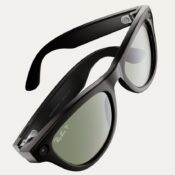
When I go out on my own in London, my Meta smart glasses help me feel safer. I can call someone, dictate a WhatsApp message or send a photograph to family and friends, all by voice. A video call can let someone see what I am looking at if I need help. I have muscular dystrophy and use a powered wheelchair. I cannot pick up a phone to make a call or turn my wrist to see and use a smartwatch, a limi...


Tim Cook’s Apple accessibility report card: good progress, but unfinished business remains
Tim Cook has written a farewell letter to Apple staff on his final day as CEO, reflecting on 15 years at the top of one of the world’s most influential technology companies. In it, Cook says he is most proud of “what an annual report could never capture”. Well, Tim, since you mention annual reports, here is one you probably weren’t expecting. Your accessibility end-of-term report. I should say at ...


My smart glasses have one camera. This Waymo has 29. Why ban the glasses?
I was out in central London recently when I spotted something I had not expected to see quite so soon: a Waymo car. Waymo, the autonomous driving company owned by Google parent Alphabet, is currently testing its technology on London streets ahead of plans for a commercial driverless service. During these early trials, trained specialists remain behind the wheel. Naturally, I wanted a photo. So I l...

Rambler is the reason I bought a Pixel 11 Pro. After a week, I’m glad I did
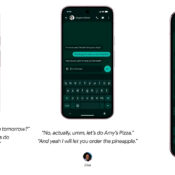
I am probably still an iPhone person at heart, but I have kept a Google Pixel alongside my iPhone for the past three or four years. This year, I came close to changing that. I was seriously considering selling my Pixel 10 Pro and going back to using an iPhone alone. Then I watched Google demonstrate Rambler at the Pixel 11 launch. As someone who depends heavily on voice input, it immediately caugh...

Why can’t Voice Control or Apple’s new Siri start an iPhone screen recording?
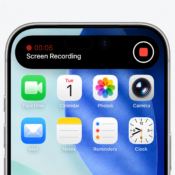
Taking a screenshot on an iPhone with Voice Control could hardly be simpler. Say “Take screenshot” and it happens. Starting a screen recording is very different. There is no equivalent direct Voice Control command. Siri cannot start one either, and Screen Recording is not available as an action in Shortcuts. For people with severe upper-limb disabilities, that leaves a surprisingly complicated rou...


Calling smart glasses ‘predator technology’ ignores disabled people who rely on them
Today, while I was out in London, I used a new feature in software version 127 of my Ray-Ban Meta smart glasses to make a WhatsApp video call to my friend Halina. I simply said: “Hey Meta, video call Halina on WhatsApp.” The call began without me touching my phone or the glasses. I could show her where I was and share what I was seeing as I moved around the city. For most people, this might sound ...

At last, Meta’s smart glasses let me end calls on my own terms
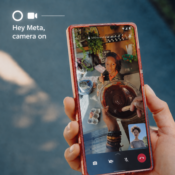
In May, shortly before Global Accessibility Awareness Day, Meta announced that it was bringing a new set of hands-free call controls to its AI glasses. The company said people would be able to mute and unmute calls, turn their video on or off and hang up using Meta AI, without touching their phone or the glasses. The controls would work with calls on WhatsApp, Messenger, Instagram and Be My Eyes. ...
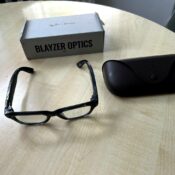

Ray-Ban Meta Blayzer Optics review: the first pair that finally fit
Most smart glasses reviews start with the camera, the AI, the speakers or the battery. This one has to start with my nose. For context, the Ray-Ban Meta Blayzer Optics are part of a newer, prescription-first range of smart glasses designed specifically to look and function like standard daily eyewear, rather than tech accessories. That is not as trivial as it sounds. If ordinary glasses slip, they...
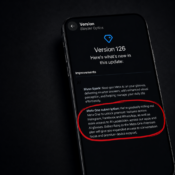

Meta’s Conversation Focus paywall crosses a line
Meta’s decision to cap free use of Conversation Focus on its smart glasses should worry anyone who cares about the future of mainstream accessible technology. I first spotted the issue in the Version 126 release notes for my Ray-Ban Meta smart glasses, which appeared for me in the UK last Friday. It looked like a big update. Muse Spark was the headline feature, promising next-generation Meta AI on...
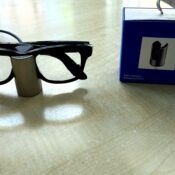

Meta Glasses Charging Stand review: simple, premium and useful at home
The new Meta Glasses Charging Stand is one of those accessories that does not need a long explanation. It is a small, simple device designed to do one thing: make charging Meta smart glasses easier when you are at home. I ordered mine on Tuesday, launch day, after an early “not available” message briefly made ordering confusing. Later the same day I was able to place the order, and it arrived in t...
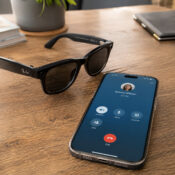

Meta’s new call controls show why voice-first smart glasses matter
Meta has announced new accessibility features for its AI glasses ahead of Global Accessibility Awareness Day, and two of them deserve particular attention. Soon, users will be able to manage calls on WhatsApp, Messenger, Instagram and Be My Eyes by voice. That includes muting, unmuting, turning video on or off, and hanging up without touching their glasses or phone. As with many Meta AI glasses up...
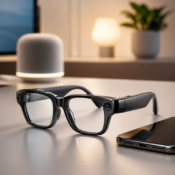

Apple smart glasses must learn the right lesson from Ray-Ban Meta
Apple appears to be moving closer to its first smart glasses. Recent reporting suggests the company is working on an AI-led wearable, with Bloomberg reporting several frame styles and camera designs, and Reuters previously reporting that Apple planned smart glasses as part of a broader push into AI devices. Apple has not announced such a product, so timing remains speculative. But current rumours ...