

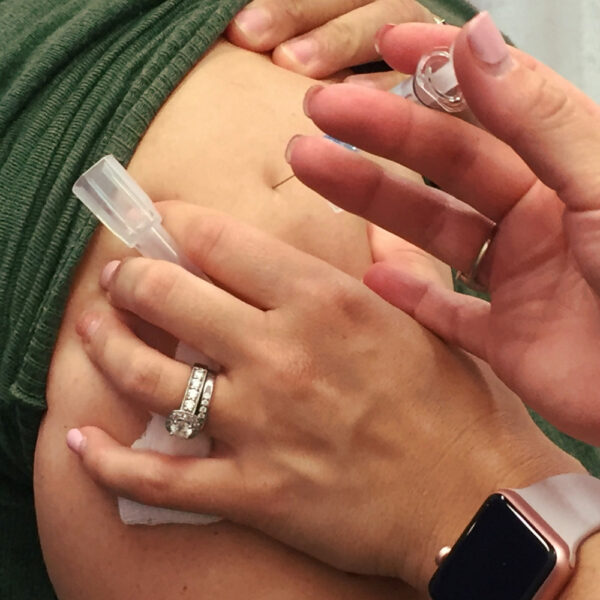
Prime Minister Andy Burnham has announced a £40 million programme to help keep vulnerable patients out of hospital this winter. It will support additional GP care for up to 300,000 people, particularly those living with heart disease, respiratory conditions and frailty.
The announcement, made on 9 November alongside Health Secretary Yvette Cooper, is a welcome recognition that preventing serious illness is better for patients and less costly for an NHS already under considerable pressure.
There is, however, an important qualification. As The Guardian reported, the £40 million is being reallocated from existing GP budgets rather than representing new funding. Shuffling money between already overstretched primary care services will not suddenly create the capacity needed to reach patients at home.
Burnham says the government wants GPs to reach vulnerable people early, before their conditions deteriorate and they end up in hospital. He is right.
But if preventing serious illness among vulnerable patients is the priority, why do housebound patients appear to be left at the back of the queue for flu vaccination, almost six weeks into the main adult programme?
That is the question I find myself asking for the second winter running.
Another winter, another vaccination struggle
I am 61 and have muscular dystrophy, heart failure and respiratory failure. I use a powered wheelchair and depend on overnight ventilation.
Just a month ago, I was in hospital with pneumonia. The NHS care I received was excellent, but my admission must have involved considerable expense. I certainly don’t want to find myself back in hospital this winter.
Flu and Covid vaccinations cannot prevent every respiratory infection, but they can significantly reduce the risk of serious illness and hospitalisation from the infections they target. For someone with my medical history, that protection is vital.
In December last year, I wrote about my struggle to obtain flu and Covid vaccinations at home. I eventually received both from the same visiting NHS team, very late in the season.
I hoped the experience would not be repeated.
Yet here we are on 11 November 2026, and I still haven’t received my flu vaccination or had a clear answer about the Covid vaccination recommended by my hospital consultant.
About a month ago, I contacted my GP surgery in Westminster. The receptionist explained that the practice did not administer the vaccinations itself but could not tell me which organisation was responsible for housebound patients. Nor could she confirm whether I had been referred to the appropriate vaccination team.
Two weeks later, while speaking to my GP about another medical matter, I raised the question again. She did not know what arrangements were in place but promised to find out and get back to me. I heard nothing.
I then began trying to establish who was responsible myself.
Finding out proved surprisingly difficult. Contact details for the team arranging local home vaccinations were not readily available, and finding a working email address required considerable digging. To make matters worse, NHS West and North London Integrated Care Board (ICB) has closed its general telephone enquiries service, leaving patients increasingly dependent on email to navigate the system.
For disabled people who cannot easily use online services, the loss of a telephone contact route creates another potential barrier. And for those of us who cannot simply visit a surgery or vaccination centre, knowing who to contact is especially important.
Eventually, after several enquiries, I received a response from the ICB’s Prevention and Vaccination Team.
It confirmed that home vaccinations for eligible housebound patients registered at my surgery were being delivered through South Westminster Primary Care Network (PCN), a group of local GP practices working together to provide NHS services.
The ICB promised to follow up directly with my practice and the PCN to ensure I was contacted as soon as possible to arrange a home visit for both vaccinations.
That was encouraging. But at the time of writing, I have heard nothing from my GP practice or the PCN, and I still have no appointment.
It should not take weeks of telephone calls and emails for a severely disabled person to discover who is responsible for delivering a routine NHS vaccination at home.
A similar experience in Cornwall
This is not simply a personal grievance arising from one London GP practice.
An Aestumanda reader from Cornwall has contacted me about similar difficulties obtaining timely home vaccinations.
She describes a situation in which her GP practice is struggling to vaccinate housebound and care-home patients with limited staffing. According to information she received from her local ICB, home vaccination visits are scheduled to run from October until mid-December.
She received her vaccination in December last year. Although her local ICB has indicated another December appointment this winter, her GP surgery has still not confirmed the date.
Importantly, she does not blame her GP practice, which she believes is doing its best with the resources available. Her concern is that the wider NHS system does not appear to provide sufficient support to reach housebound patients promptly.
She has raised the matter locally and is seeking answers about how the service is organised.
One particular question concerns district nurses.
For years, district nurses helped deliver vaccinations to people who could not leave their homes. This was my own experience too, and the arrangements generally worked well.
The reader from Cornwall says her practice previously received help from district nurses but no longer does. She has been unable to establish why.
There may be legitimate operational reasons for changes to the service. District nursing teams face pressures of their own, and vaccination arrangements differ between areas.
But patients should not be left trying to work out how the system operates, particularly when their health depends on receiving timely preventive care.
Two experiences cannot establish the scale of a national problem. They do, however, raise legitimate concerns when patients hundreds of miles apart encounter similar delays and uncertainty.
Who is responsible for reaching housebound patients?
The situation becomes more difficult to understand when the NHS’s own guidance is examined.
Under the 2026/27 NHS vaccination service specification, participating GP practices must offer vaccination to eligible patients, including those who are housebound. The guidance requires practices to contact eligible patients proactively and make reasonable efforts to vaccinate people who cannot attend surgery premises.
It also states that patients should not experience particular difficulties accessing the service because of disability.
On paper, the obligations appear clear.
In practice, my experience has been of a GP surgery unable to explain who is responsible, unanswered enquiries and an ICB that only identified the relevant vaccination service after I pursued the matter myself.
The difficulty is not simply that the vaccination is late. It is the absence of clear, accessible information about how housebound patients are supposed to obtain it.
Meanwhile, people who can travel have been able to arrange flu vaccinations through GP surgeries and pharmacies for weeks, with walk-in services also available in some areas.
For those of us who cannot leave home, there is no equivalent straightforward route.
The national flu vaccination programme began for most eligible adults on 1 October. NHS guidance says the majority of vaccinations should be completed by the end of November, so that people are protected ahead of the winter period.
There is also an important distinction between flu and Covid vaccination this year.
Eligibility for the autumn Covid programme has been narrowed to people aged 75 and over, older care-home residents and those who are immunosuppressed. Severe disability or respiratory illness does not automatically qualify someone.
My consultant at the Royal Brompton Hospital has written to my GP recommending a Covid vaccination. The ICB has since indicated that arrangements will be made for both vaccinations, but I have still not received a clear explanation of how my eligibility is being assessed.
Clear communication should be the baseline, not an afterthought.
If someone is eligible, there should be a straightforward way to arrange a vaccination at home. If they are not eligible, despite documented clinical vulnerability and a specialist recommendation, they should receive a clear explanation.
Neither should require weeks of uncertainty.
Prevention must reach people who cannot leave home
According to the Department of Health and Social Care, more than 13.6 million people in England had received their flu vaccination by 1 November, around 300,000 more than at the same point last year.
That is encouraging.
But national vaccination totals do not tell us whether housebound patients are being reached as promptly as those who can attend GP surgeries and pharmacies.
How many eligible housebound patients are still waiting? How many have received an appointment? And what proportion will be vaccinated before December?
More fundamentally, who is accountable when a patient cannot even establish which service is responsible for arranging a home visit?
These should be basic questions for a health service committed to preventive care.
The government’s latest initiative may help people with complex conditions avoid unnecessary hospital admissions. Its emphasis on identifying those at greatest risk and supporting them earlier is sensible.
But the fact that the £40 million is coming from existing GP budgets also raises questions about whether local services have sufficient capacity to meet these ambitions.
We cannot expect overstretched practices and community teams to deliver more without ensuring they have the resources to do so.
I know from recent experience how valuable hospital treatment can be. I am grateful to the NHS professionals who cared for me during my pneumonia admission.
But I would much rather remain well at home than require their services again this winter.
That is surely what preventive healthcare should be about.
If Labour is serious about keeping vulnerable patients out of hospital, it needs to ensure that existing preventive services work for everyone, including those who cannot travel to receive them.
That means identifying housebound patients early, making vaccination arrangements clear, providing adequate staffing and ensuring someone is accountable when things go wrong.
Otherwise, some of the people who have the greatest difficulty recovering from a serious respiratory infection risk being among the last to receive protection.
Andy Burnham’s ambition to keep vulnerable patients well at home is the right one.
Ensuring they can obtain timely flu vaccinations, without having to fight their way through an administrative maze, would be a good place to start.
Have you experienced difficulties arranging flu or Covid vaccinations at home this winter? We would welcome hearing about your experience. You can contact Aestumanda to share your story.