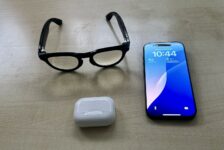

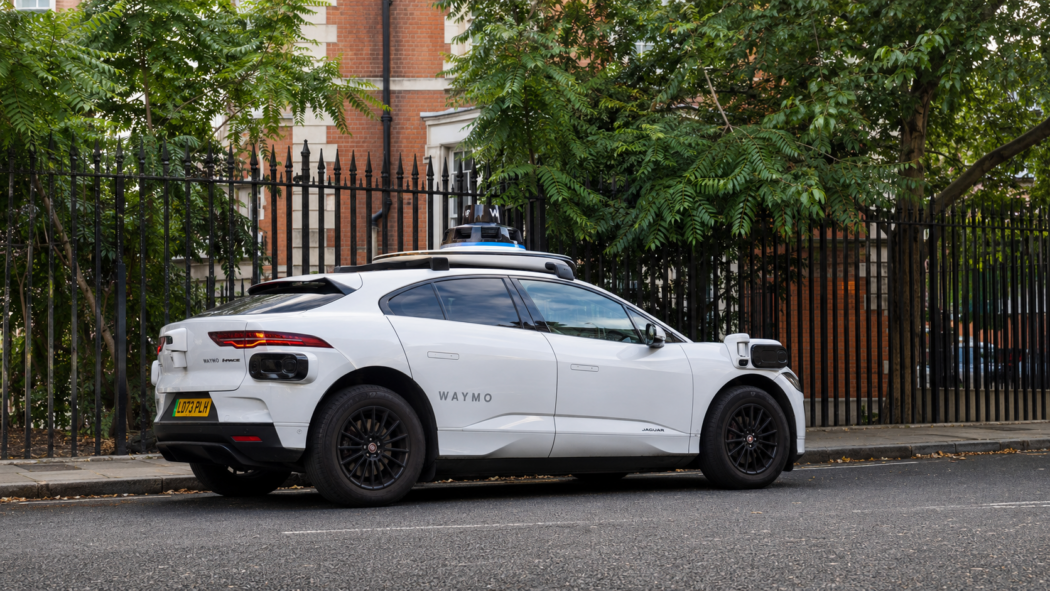
I was out in central London recently when I spotted something I had not expected to see quite so soon: a Waymo car.
Waymo, the autonomous driving company owned by Google parent Alphabet, is currently testing its technology on London streets ahead of plans for a commercial driverless service. During these early trials, trained specialists remain behind the wheel.
Naturally, I wanted a photo.
So I looked towards the car and said: “Hey Meta, take a photo.”
My Ray-Ban Meta smart glasses did the rest.
It was only afterwards that the irony struck me. There I was, wearing glasses containing a camera, photographing a vehicle covered in cameras and sensors.
Watching you, watching me.
Waymo says its Jaguar I-PACE vehicles have 29 cameras, alongside lidar and radar. Those cameras give the vehicle a simultaneous 360-degree view and can spot objects hundreds of metres away.
My Ray-Ban Meta glasses have one camera.
29 cameras versus one
It is an arresting comparison, but I am not suggesting that a driverless car and a pair of smart glasses are directly comparable. That would be ridiculous.
They do completely different jobs, collect information for different reasons and present different privacy risks. A Waymo is also rather difficult to miss. A small camera built into an otherwise ordinary-looking pair of Ray-Bans is inherently more discreet.
But the contrast is precisely what got me thinking. Are we applying consistent principles when we talk about cameras and privacy, or are some of our reactions shaped by which technologies have become familiar and which still feel new?
What is the Waymo seeing?
A self-driving car cannot work without looking at the world around it. If I am travelling along a London pavement when a Waymo passes, its sensors need to know I am there.
I, along with countless other pedestrians, cyclists and motorists, may therefore enter the field of view of its cameras. I have not explicitly consented to that. Nor are there 29 flashing lights warning everyone nearby whenever those cameras see them.
That does not particularly alarm me. I understand why the cameras are there.
Waymo says its vehicle cameras are designed for core functions such as mapping, driving safely and improving its technology, and that it does not use facial recognition or other biometric identification technologies to identify people. It also says it does not sell personal information collected by its vehicle cameras and sensors.
There is an interesting safeguard for people in Britain too. Someone who believes they may have been captured by a Waymo external camera can ask to see or erase their personal data. For an access request, Waymo says it can provide a blurred clip of around 30 seconds from the specified time and place.
Those protections lead to the questions I think we should ask of any technology that sees the world around us:
What is being captured?
Why is it being captured?
Where is it processed?
How long is it kept?
Who can see it?
Can it identify me?
Can I have it deleted?
Those questions should apply to Alphabet and Waymo. They should certainly apply to Meta.
Then there is the camera almost everybody carries
There is another comparison much closer to everyday life: the smartphone.
Whenever I am out in London, people around me are constantly taking photographs and recording videos. Tourists film landmarks. People photograph their friends. Someone makes a TikTok. Someone else takes a selfie.
I have no doubt that I appear in the background of photographs and videos fairly regularly. It does not particularly bother me.
Other people will feel differently, and context matters. But appearing incidentally in somebody’s photograph on a public street has become an ordinary consequence of living in a world where almost everyone carries a high-quality camera.
What is interesting is that the phone taking that photograph generally gives me no outward-facing warning that it is recording.
An iPhone, for example, displays a green indicator when its camera is being used. But that indicator is on the phone’s screen. It tells the owner that an app is accessing the camera. It does not warn the person standing in front of the lens.
A smartphone can be conspicuous. If somebody raises one and points it directly at you, you may reasonably assume you are in shot.
But it can also be used very discreetly. A phone can be held at waist height, rested on a table or positioned while someone appears merely to be looking at the screen.
There are circumstances in which a phone could record somebody more surreptitiously than smart glasses with an outward-facing recording light.
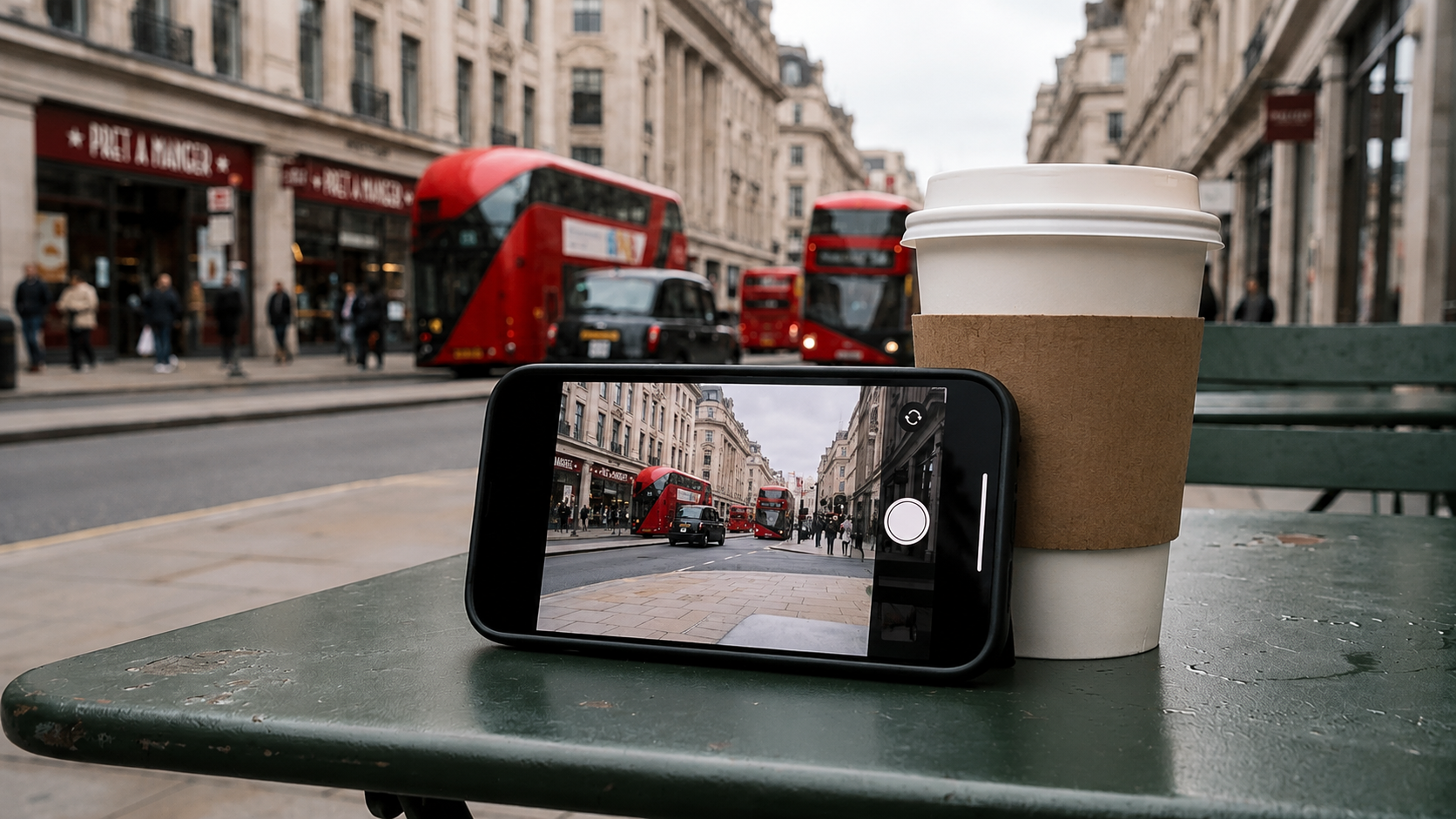
Yet we barely discuss smartphone cameras any more. We have become used to them.
Smart glasses really are different
None of this means smart glasses present exactly the same privacy issues as phones. They do not.
The camera points wherever the wearer’s head is pointing. Looking at somebody and pointing the camera towards them can become the same physical action. That makes point-of-view recording unusually easy and less obvious from body language.
There have been legitimate concerns about people exploiting that, particularly men filming women without meaningful consent and then posting the encounters online.
I do not dismiss those concerns, and nobody interested in the accessibility benefits of smart glasses needs to defend people who misuse them.
I certainly don’t.
Deliberately filming somebody to humiliate, sexually objectify or harass them is very different from somebody appearing incidentally in the background of a photograph on Oxford Street.

Meta
The law already recognises some of those distinctions. In June, the UK Government said people may lawfully use smart glasses and similar recording technology in public, while offences such as harassment, stalking and voyeurism may apply where people are recorded to cause alarm or distress or for sexual gratification. Sharing intimate images without consent can also be a criminal offence.
That seems a more sensible starting point than declaring a particular shape of camera inherently unacceptable.
Tackle the harmful behaviour. Make misuse harder. Protect people where they have a genuine expectation of privacy.
But do not confuse misuse of a technology with the existence of the technology itself.
That little white light matters
This is where the capture LED on Ray-Ban Meta glasses deserves more attention.
When a photograph or video is captured for the wearer’s gallery, a white light on the front of the glasses activates to tell people nearby. Meta says there is no switch to turn it off.
It is not a perfect system. Somebody may not notice the light. They may not know what it means. Bright conditions may make it harder to see.
Most importantly, notification is not consent. A light tells somebody that recording is taking place. It does not mean they have agreed to be filmed.
But it is still an outward-facing warning that the smartphone in somebody’s hand generally does not provide.
Meta has also been forced to deal with people deliberately trying to defeat it. Second-generation glasses disable the camera if the LED is blocked, and Meta has introduced further protection against physical tampering. Its latest change goes further: if somebody starts recording and then covers the LED, the camera now stops recording.
That is the response I want to see from manufacturers. When somebody finds a loophole, close it. If another appears, close that too.
The fact that smartphones lack an equivalent warning is not an argument for lowering the standard on smart glasses. It is a reason to ask why our expectations are so different.
The harder privacy question is AI
The capture light is not the whole privacy story.
In fact, some of my bigger concerns begin when the glasses are not taking an ordinary photograph or video at all.
Ray-Ban Meta’s current UK information says that on newer models the capture LED does not illuminate for some camera-based AI functions, such as identifying a landmark or plant, because the camera is not capturing content intended for the wearer’s gallery.
That distinction may make technical sense. It is less obvious to the person standing in front of the glasses.
When somebody asks Meta AI about what they are looking at, an image can be sent for processing. That is why the public needs much clearer explanations of what happens behind the scenes.
I want to know how much processing can happen on the glasses or phone rather than in the cloud, what is retained, for how long, how material may be used to improve Meta’s products and what happens when innocent bystanders appear in images sent for AI analysis.
I use these glasses every day and value what they give me. That does not mean I am prepared to stop asking difficult questions about what Meta is doing with the technology.
The accessibility blind spot
But accessibility is still largely missing from this debate.
And when it does come up, the conversation has a remarkable tendency to begin and end with blind and deaf people.
Those uses are important. Camera-based AI and services such as Be My Eyes can help blind and visually impaired people, while live captions and translation on display-equipped smart glasses can help deaf and hard-of-hearing people.
But smart-glasses accessibility is much broader than sight and hearing.
People with severe upper-limb disabilities barely feature in the discussion at all.
I do not think that omission is necessarily deliberate. Often it reflects a narrow understanding of what accessibility means and which barriers smart glasses can remove.
But the omission has consequences, because if we only talk about blindness and deafness, we risk overlooking a large group of disabled people whose problem is not seeing or hearing a smartphone, but physically operating one.
For me, that omission is very personal.
Twenty years of smartphone photography passed me by
I have lived through roughly two decades of the smartphone era and watched phones transform photography.
Taking a picture became spontaneous. See something interesting, reach for your phone, take the photo and share it.
Billions of people gained the ability to document their own lives and show other people the world as they saw it.
I couldn’t.
My arms do not work. I cannot pick up a smartphone, hold it in front of me, point the camera and press the shutter.
Of course, I could ask somebody else to take a photo. I could ask somebody to hold my phone.
But that is not the same thing as seeing something, deciding for yourself that you want to capture it and taking the photo at that moment.
For around 20 years, that ordinary part of smartphone culture was largely unavailable to me.
Then smart glasses came along.
Now I can look at something and say: “Hey Meta, take a photo.” I can record a video in the same way.
No reaching. No holding. No tapping a screen. No asking somebody else to do it for me.
That photograph of the Waymo that started this article exists because I took it myself
That may sound like a small thing if you have always been able to pick up a phone and use its camera.
After 20 years unable to do it, it does not feel small to me.
Photography is only part of the story. Smart glasses can also let me make calls, send WhatsApp messages, ask for information, listen to music and use other digital services without physically operating a phone. They can also play an important role in my personal safety, allowing me to contact someone or capture what is happening around me hands-free because I cannot reach for a phone.
For somebody with a severe upper-limb disability, removing that physical interface can be the difference between being able to do something independently and not being able to do it at all.
We are talking about millions of people
And this is not simply about me.
Muscular dystrophy, motor neurone disease, spinal cord injury, Parkinson’s, stroke, multiple sclerosis, cerebral palsy, arthritis and many other conditions can affect somebody’s ability to reach for, hold or operate a smartphone.
Not everybody with those conditions has an upper-limb impairment, and not everybody with a dexterity impairment will want or need smart glasses. There is also considerable overlap between diagnoses.
I know disabled people who use smart glasses and find them valuable, and others who have little interest in them. Some take the view that the world should adapt to disabled people rather than disabled people having to rely on technology to work around inaccessible environments.
I understand that argument. But for me, technology that removes a barrier now can be just as important as campaigning to remove that barrier more broadly.
So it would be misleading to add a collection of condition statistics together and announce a precise number of potential smart-glasses users.
But we can say something about the scale.
The latest Department for Work and Pensions Family Resources Survey estimates that 16.7 million people in the UK are disabled. A government accessibility study, using Family Resources Survey data as its UK comparison, put dexterity impairment at 25% of disabled people.
Those figures are not a smart-glasses market forecast, and they should not be treated as one.
They do show that when we talk about disabled people who may have difficulty physically operating phones and other technology, we are talking about millions of people, not a tiny edge case.
Some, like me, are already benefiting. Others may find the technology increasingly useful as it develops.
The ableism in the prescription-only argument
Earlier this month, the Guardian published a letter from me about the accessibility benefits of smart glasses. The letters page was headed “Smart glasses controversy sidelines the benefits for disabled people”, and its introduction referred to “the ableism rife in the debate”.
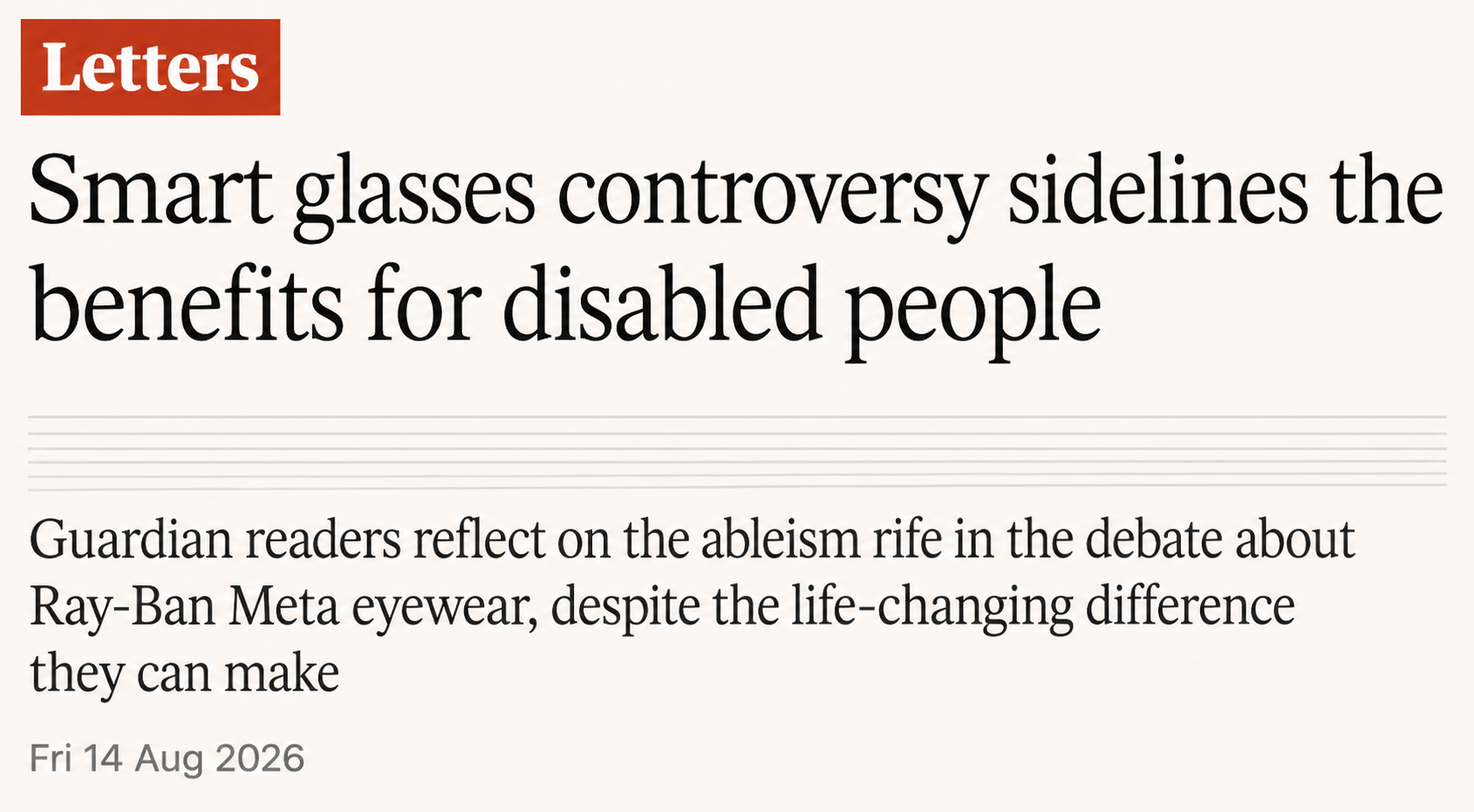
The Guardian
I think there is one part of this debate where the charge of ableism particularly fits.
I have seen suggestions that smart glasses should be banned for the general public but allowed on prescription for disabled people.
That turns access to mainstream technology into a medical exception.
Who decides which impairments qualify? What happens to the disabled person whose needs were not considered when the approved criteria were drawn up?
A bystander’s privacy does not change according to the diagnosis of the person wearing the glasses
If the capture light and other safeguards make a pair of smart glasses acceptable when the wearer is disabled, those same safeguards should offer the same protection when the wearer is not.
If the camera presents an unacceptable risk, a prescription does not make it less intrusive.
Disabled people should not have fewer responsibilities towards other people’s privacy. But nor should we need medical permission to use mainstream consumer technology.
One of the things I value about Ray-Ban Meta glasses is precisely that they are not specialist disability equipment. They are ordinary consumer products bought by disabled and non-disabled people alike.
They look normal. They look cool. What’s not to like about Ray-Ban-style glasses compared with being pushed back towards expensive, dorky-looking specialist technology designed specifically for disabled people?
That may sound superficial, but it is not.
For too long, disability technology has often meant specialist products that are expensive, conspicuous and produced in small numbers.
Mainstream technology brings scale, competition, investment and faster development. Meta, Google, Apple and other major technology companies are putting huge resources into wearable computing and AI because they believe smart glasses could become mainstream products.
Mark Zuckerberg has gone considerably further. He has predicted that people without AI glasses, or another way of interacting with AI, could eventually be at a “pretty significant cognitive disadvantage” compared with those who have them.
Investment on that scale can mean better hardware, faster software development, more choice and, potentially, lower prices.
But there is another advantage to mainstream technology: integration. Ray-Ban Meta glasses are connected to services such as WhatsApp, Instagram and Facebook, allowing people to communicate and share photographs and videos through the same platforms their friends, families and communities already use.
A small specialist product designed only for disabled people might not offer the same level of integration or access to the services people use every day. Accessibility should not simply give disabled people a way of performing a task. Where possible, it should enable us to participate in the same digital world as everybody else.
Disabled people have often experienced the opposite in small specialist markets: higher prices, less choice, slower innovation and products that can sit outside the mainstream services other people take for granted.
Mainstream technology becoming more accessible is progress.
If smart glasses do become an important mainstream computing platform, banning them for the general public while allowing disabled people only narrow prescription-based exemptions would be a particularly perverse outcome. It would turn an ordinary consumer technology into something disabled people had to seek special permission to use.
A ban would shut disabled people out
My concern about bans is not hypothetical.
At the time of writing, an open UK Parliament petition is calling for an immediate ban on the sale and promotion of smart glasses with recording capability. It has attracted more than 7,500 signatures and is approaching the 10,000 needed to trigger a Government response.
I understand why some people are worried. Wearable cameras can be misused, and AI adds another layer of concern.
But people calling for bans also need to consider what they would be taking away.
For somebody who can easily pick up a smartphone, losing smart glasses may mean going back to their phone camera.
For somebody who cannot pick up that phone, there may be no equivalent alternative.
A blanket ban could therefore remove a useful mainstream accessibility tool from people with a wide range of physical impairments, potentially affecting a population measured in millions.
The UK Government’s current approach is more proportionate. It has said it has no plans for smart-glasses-specific legislation and does not wish to prevent law-abiding people using the glasses for private or domestic purposes where this causes no harm to others.
That does not mean the status quo is good enough.
There are legitimate privacy concerns around wearable cameras and AI, and they require stronger safeguards. But those safeguards should address the risks without removing the technology altogether.
What should happen instead?
I do not think the answer is to pretend there is no problem.
There are sensible things manufacturers, platforms and governments can do without banning smart glasses.
Capture lights should be prominent, reliable and extremely difficult to defeat. If somebody tampers with the indicator, recording should stop.
There also needs to be a clearer distinction between ordinary recording and the quieter use of the camera for AI. If the glasses are analysing the world around the wearer without creating a conventional photograph or video, people should still have some way of understanding that the camera is active.
More processing should happen on the glasses or phone where technically possible, with much clearer rules around cloud processing, retention and human review.
I would also be extremely cautious about facial recognition. Smart glasses routinely identifying strangers around the wearer would, in my view, cross a very different privacy line.
The use of smart glasses in toilets, changing rooms and other places where people have a clear expectation of privacy should be treated very differently from their ordinary use in public. Platforms should act firmly against harassment, voyeurism and content designed to humiliate people filmed without meaningful consent.
Government should focus on harmful behaviour and proportionate safeguards rather than banning an entire category of technology.
And before politicians or regulators propose restrictions, they should consider the accessibility consequences too. A rule designed to solve one problem can easily create another.
There is also a wider question.
If an outward-facing recording indicator is considered an important privacy safeguard on smart glasses, perhaps we should at least ask whether similar expectations should apply to other personal cameras as well.
I don’t want weaker privacy protections. I want stronger safeguards, clearer rules and tougher action against misuse, without shutting disabled people out of technology that can give us forms of independence that smartphones never did.
Privacy and accessibility are not opposing sides
I keep coming back to that Waymo.
29 cameras on one vehicle.
One camera on my glasses.
Alphabet versus Meta.
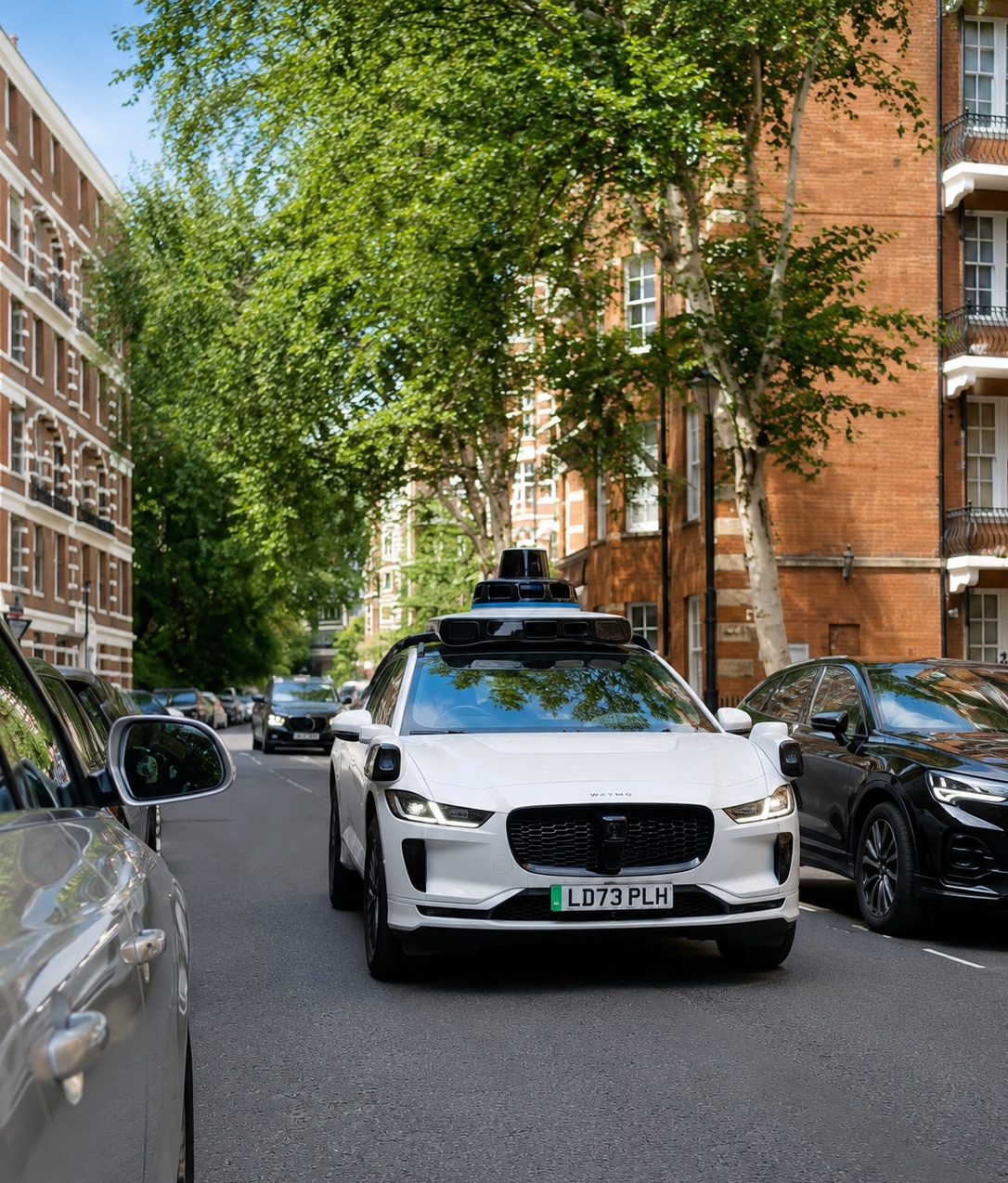
I photographed the Waymo. Its cameras may well have seen me at the same time.
Neither fact particularly troubles me on its own.
What matters is why the cameras are operating, what happens to the information they collect and what safeguards surround their use.
The same principle should apply to smartphones, CCTV, video doorbells, dashcams and smart glasses.
Wearable cameras do create distinctive privacy concerns, and pretending otherwise would weaken the case for them. Meta deserves scrutiny. So do the people who misuse its products.
But we should also be honest about what this technology can give disabled people.
For around 20 years, I watched other people use smartphones to photograph and film their own lives while the physical design of those devices largely excluded me from doing the same thing independently.
Now I can look at the world and capture what I see for myself.
So when people call for a ban, I would ask them to consider not only what they hope to prevent.
Consider what they may also be taking away.
Privacy matters. So does accessibility
We should be capable of protecting both.
Watching you.
Watching me.