

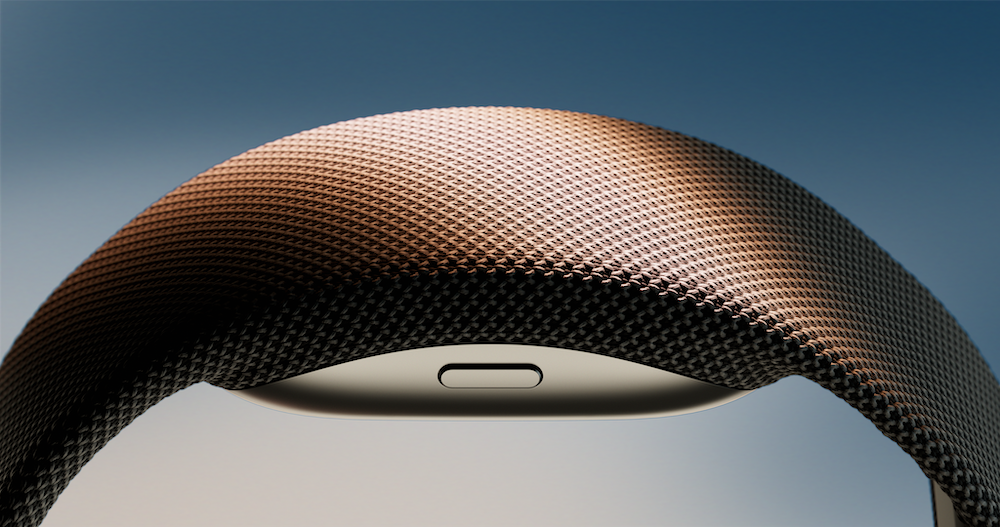
Earlier this month at CES 2026, Meta announced a new research collaboration with the University of Utah exploring EMG smart home control and how consumer-grade EMG wrist wearables could support people with different levels of hand mobility.
Using the Meta Neural Band, the research will examine how electrical signals generated by muscles at the wrist can be translated into digital input. Importantly, this work is not limited to navigating smart glasses. The stated aim is to explore how custom EMG gestures could be used to control everyday devices such as smart speakers, blinds, locks and thermostats.
As part of this work, the University of Utah team is also testing the precision of EMG input by using the wristband to steer the TetraSki, an adaptive ski designed for people with complex physical disabilities. That kind of testing highlights the broader ambition of the research: understanding whether EMG can support intentional control in demanding, real-world scenarios.
A use case worth considering
As this research evolves, one area that feels worth considering is personal safety.
With very limited movement in my upper limbs and reliance on a ventilator to breathe, I can sometimes feel vulnerable in bed at night. I have looked at smart buttons as a way of summoning help when voice control or a smart speaker is not an option. In theory, these can be programmed to trigger Alexa routines that contact a caregiver or family member.
In practice, current solutions often have critical failure points. Physical buttons can be dropped or lost in bed sheets during sleep, but for people with paralysis or severe muscle weakness, pressing a button at all can also be difficult or impossible. Smart speakers and cloud-based systems fail if the internet goes down, and some disabled people cannot speak at all, or cannot speak clearly while using a ventilator mask.
For people whose interaction options are already limited, these are not edge cases. They are everyday risks.
Where EMG smart home control could fit
In situations like this, the value of EMG is not convenience, but the possibility of creating an option where few exist today. Some will rightly question whether consumer-grade EMG can be trusted for mission-critical use, and at this stage that caution is fair.
But for people with very limited movement, there are often no good alternatives at all. Research like this opens the door to interaction methods that may, over time, become dependable enough to matter. In the meantime, they could still be better than having no option at all.
What makes EMG particularly interesting here is that it does not rely on physical force. It is designed to detect intent, not movement. Even when visible movement is minimal or absent, electrical signals at the wrist can still be present.
A wearable EMG wristband stays with the person, does not need to be reached for, and does not depend on speech. For someone who is significantly paralysed or has severe muscle weakness, subtle and intentional muscle signals could, in time, be used to trigger a smart home routine or run an action on a phone that contacts a caregiver or family member. Even low-amplitude signals may eventually be enough to trigger a call for help.
Possibilities in healthcare settings
There are also important possibilities for hospitals and healthcare settings. Very ill patients may struggle to use traditional corded nurse call buttons, which often assume a level of motor strength that cannot be taken for granted. A wrist-worn EMG interface requiring only minimal movement could make calling for assistance easier and more consistent.
Here again, the point is not that the technology is ready today, but that these scenarios are worth keeping in mind as research progresses.
Safety beyond the home
Personal safety when out and about is another area where EMG input could prove valuable. A wrist-based interface could allow someone to quietly and discreetly call for help without speaking or reaching for a phone. In some situations, that discretion matters just as much as the ability to act at all.
A research direction worth watching
This is still early research, and there are no guarantees. Meta and the University of Utah are not claiming to have solved the challenges of mission-critical personal safety, and it would be wrong to suggest otherwise.
But by moving EMG input beyond screen navigation and into environmental control, this work lays the foundation for something more significant than a new way to interact with devices. For disabled people who rely on technology for basic autonomy, the expansion of interaction methods matters.
This research is worth watching not just for how it might help adjust lighting or open blinds, but for how it could one day help people feel safer in their own homes.