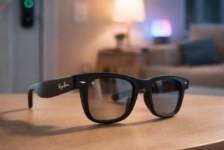


Meta announced on Tuesday that it is launching two new Ray-Ban smart glasses aimed at prescription wearers. The company says the new models support nearly all prescriptions and are designed to better serve people who rely on glasses throughout the day.In the US, the new styles start at $499.
Alongside the hardware launch, Meta has also announced new AI features, including hands-free WhatsApp summaries and recall.
That is the headline news. But the real accessibility significance runs deeper than a routine product refresh.
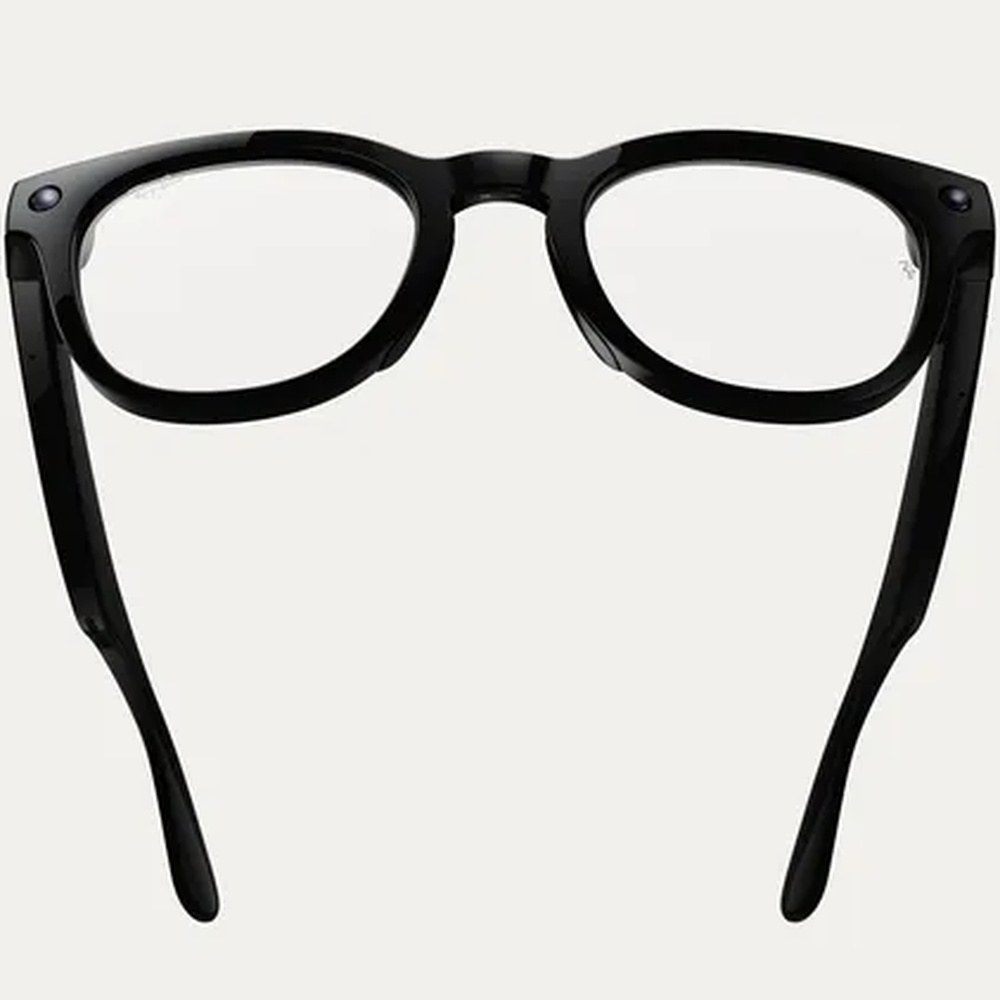
Meta says its new prescription-focused styles are built around all-day wear, with fit features including overextension hinges, interchangeable nose pads and optician-adjustable temple tips. It also says the glasses come in two new frame designs, Blayzer and Scriber, with Blayzer available in Standard and Large sizes.
Why the WhatsApp feature matters
For me, the most important software announcement is WhatsApp summaries and recall.
Meta says this will let people ask for a catch-up on their messages or query details from earlier conversations, and that the feature is coming to Early Access Program users across Ray-Ban Meta, Oakley Meta and Meta Ray-Ban Display glasses. If it works as described, it could address a long-standing hands-free gap: until now, older WhatsApp messages have been impossible for me to access by voice alone. Meta can read out new messages, but not older ones, and because I cannot pick up the phone myself, that creates a genuine accessibility barrier.
This is something I have been calling on Meta to implement for some time. The reason is simple: a smart glasses platform becomes much more useful when it can help you revisit message context, not just read out the newest notification. For people who depend on voice access and cannot pick up a phone, that is the difference between partial access and something much closer to real usability.
There is also a wider parallel here. I previously persuaded Apple to introduce a similar kind of hands-free improvement with Authenticate with AirPods, removing one hands-free barrier around Siri and older message readouts. Meta’s WhatsApp feature now sounds, in theory, more advanced: not just enabling access, but helping users retrieve and understand older message context by voice. If it delivers in practice, that could be a significant accessibility step forward.
That is the digital side of the accessibility story. There is a more physical side too, and it may be just as important.
Why the physical fit matters just as much
Because of my disability, if glasses slide down my nose, I cannot simply reach up and reposition them myself. It is also something I have previously called on Meta to address. In an earlier review, I argued that people who cannot use their arms due to disability have no fallback when glasses slip, and that better fit options or accessories could help solve that. So when Meta talks about interchangeable nose pads, a more tailored fit and better all-day comfort, I do not hear lifestyle marketing. I hear potential accessibility gains.
For someone who can easily nudge a frame back into place, a slipping pair of glasses may be a minor irritation. For someone who cannot, it can become a real usability problem. A device designed for all-day wear needs to work reliably as a physical object before it can succeed as an AI platform. That is why the fit features Meta is highlighting matter so much. For some disabled people, they could be part of what makes the product genuinely usable in everyday life.
Accessibility begins before the software
Smart glasses are often discussed mainly in terms of AI, voice features and software. That is understandable, because those are the parts that sound futuristic. But accessibility often starts earlier than that.
Does the device sit properly on your face?
Does it stay in place?
Can it remain comfortable over long periods without repeated manual adjustment?
Those questions can matter just as much as the assistant itself.
That is why I think the physical design side of this announcement deserves more attention than it may get. If a product is meant for all-day wear, fit and stability are not side issues. They are part of accessibility.
Prescription support is not a side issue
Meta is also right to put prescription support near the centre of the announcement.
Too often, smart glasses have been presented as though vision correction were secondary. In reality, if a wearable is going to become mainstream, it has to work properly as glasses first. Meta says these new models are built to better serve people who rely on prescription glasses and all-day eyewear, and support nearly all prescriptions.
That matters for accessibility too. Disabled people do not just need technically impressive devices. We need devices that reduce friction. If a product supports a wider range of prescriptions, offers more size flexibility and fits more securely, that is not merely a style upgrade. It improves the chances that the technology can be worn consistently and relied upon.
The gap between announcement and availability
There is, however, a clear gap between what Meta is launching now and what some of us will actually be able to try anytime soon.
The new prescription-focused glasses are due to arrive from April. But the WhatsApp summaries and recall feature is still restricted to Meta’s Early Access Program in the US. For me, based in the UK, that is slightly disappointing. It means the part of the announcement that may matter most for accessibility could still be a long way off in practical terms.
That does not lessen the importance of the feature. If anything, it highlights why it is so interesting. But it does mean there is a real difference between the hardware becoming available and the most promising software benefit remaining out of reach for now.
The real accessibility story
What I find most interesting here is that Meta’s progress is not only about smarter AI. It is also about the quieter, more practical details that often decide whether a product is genuinely accessible.
A better fit matters.
Prescription support matters.
Greater all-day comfort matters.
And hands-free access to older WhatsApp messages could matter a great deal.
For some of us, accessibility is not just about whether a device can answer a question. It is about whether it stays in place, stays comfortable and stays usable without constant physical intervention. On that measure, Meta’s new optical-first design could be just as important as the WhatsApp feature.
If the company gets both parts right, the result will not simply be smarter glasses. It will be glasses that are easier to live with and more useful to rely on.
That is the real accessibility story here.